Micro-Choreography

TUST_forrest

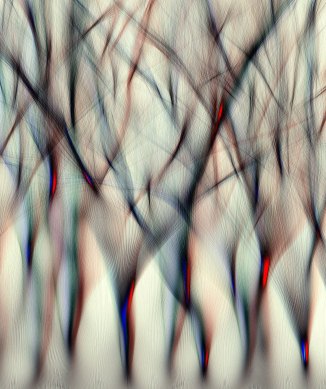
“Tust Forest” courtesy of Prof Eric Heller

Richard Feynmann famously said “If we were to name the most powerful assumption of all, which leads one on and on in an attempt to understand life, it is that all things are made of atoms, and that everything that living things do can be understood in terms of the jigglings and wigglings of atoms.
Continue reading

Leonardo Cover Article

LEO_49_2_cover-v4

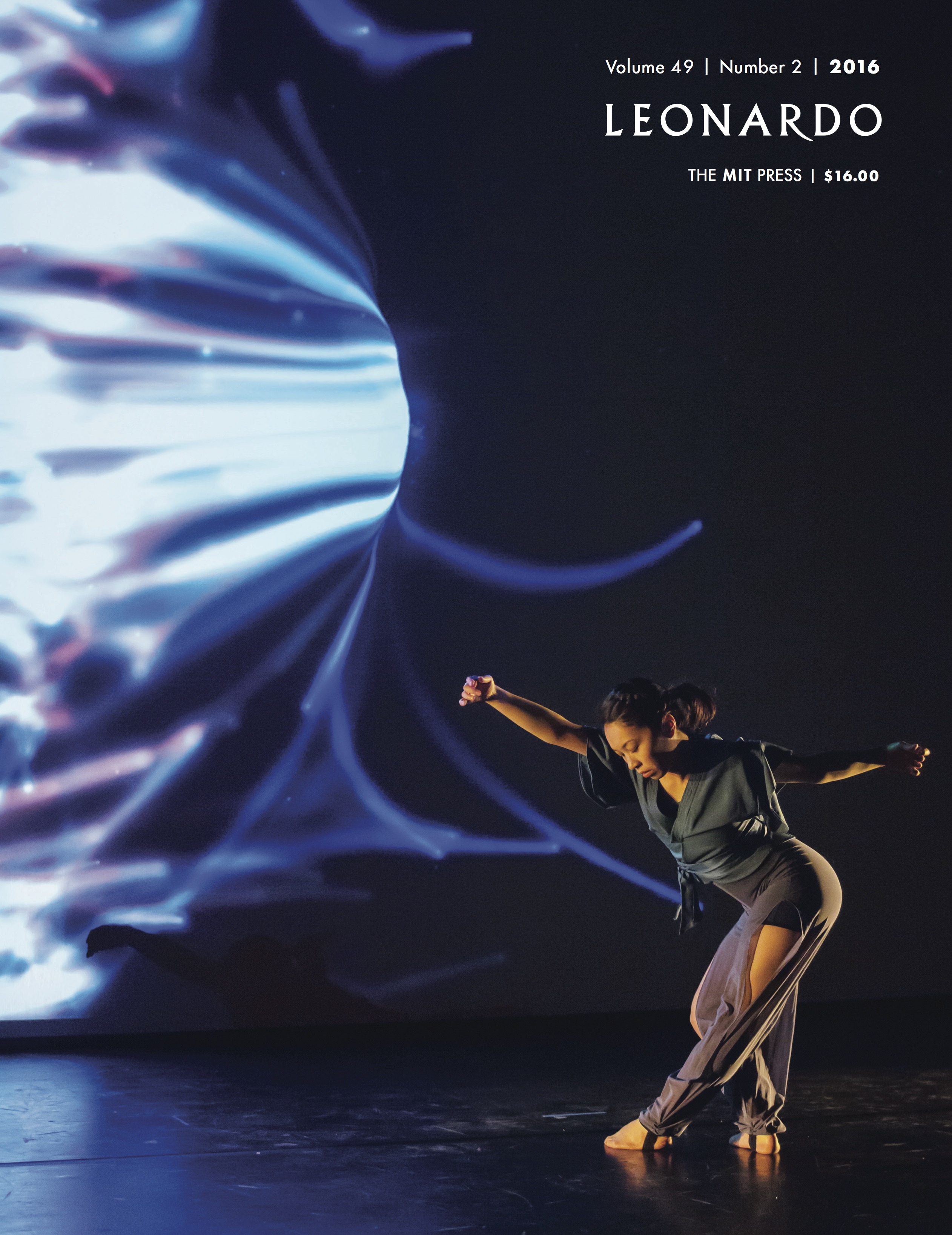
Just a quick post here to highlight some exciting news: we’ve got a paper on the cover of the current issue of Leonardo – and it looks lovely! Leonardo, published by MIT press, is the leading international peer-reviewed journal on the use of contemporary science and technology in the arts and music, and also for discussing applications and influences of the arts and humanities on science and technology.
Continue reading

ICOMET & 峨眉山 (Éméi Shān)

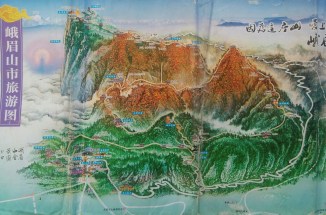
mtEmei-map.jpg

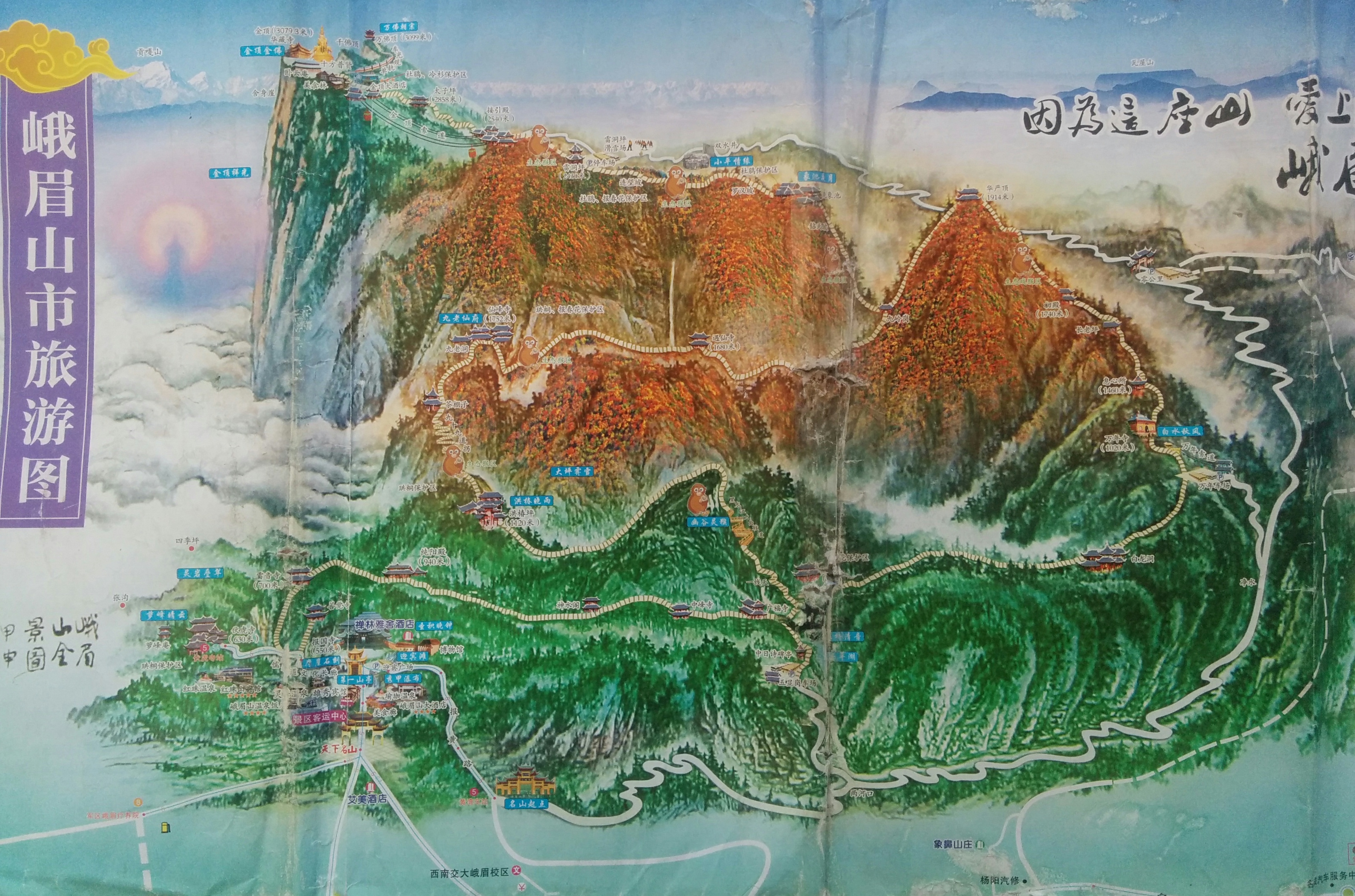
the map that got me up & down Emei Shan (click for high-res)

I’ve been meaning to post this for awhile, but it got away from me. Last October (2015!) I had the privilege of attending the ICOMET (International Conference on Molecular Energy Transfer) in Chengdu (Sichuan province, China). Organized by Prof. Aart Kleijn, the meeting was hosted by the Chinese academy of Engineering Physics and the Chinese Academy of Sciences. It covered a wide range of topics, including experimental and theoretical topics in energy transfer across the gas phase, gas/surface scattering, liquid phases, astrochemistry, and biochemistry. The meeting organization was flawless and the treatment we received from our Chinese hosts was extremely generous.
Continue reading

around the world in 26 days

aroundTheWorld

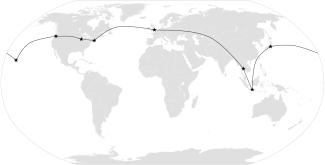
From 6th Dec 2016 – 31st Dec 2016, I managed a proper global circumnavigation: London -> Thailand -> Indonesia -> Hawaii -> Portland -> Milwaukee -> Boston -> London. It was all down to a series of meetings that clicked into place at the last second – a good example of how disorganised procrastination can sometimes work for good. Had I conscientiously organised any individual part of the journey in advance, the entire trip wouldn’t have been possible. So I’m chalking this one up to the benefit to leaving things till the last second, and trusting the universe to sort out the details.
Continue reading

Reactive Dynamics Tutorial

Part 1 outlines the types of systems that we have studied to date using our MS-EVB reactive dynamics codes.

Part 2 describes how to build the MPI-parallelized version of TINKER, along with several examples of how to run it, including geometry optimizations (TS & minima), frequency calculations, single point energy calculations, and an NVE molecular dynamics simulation.

As part of the virtual Winterschool on Computational Chemistry, I gave a presentation outlining the methods that we’ve been developing over the past few years which enable folks to carry out reactive dynamics using the multi-state empirical valence bond (MS-EVB) method.
Continue reading

Tracking Energy Flow in Liquid Reaction Dynamics

hf-solvent-v5-highRes-cropped

Results from one of the molecular dynamics simulations in the paper, showing a 400-fs time trace of the atomic nuclei. Motion of the liquid is shown in blue, and DF in white. The interlaced starlike shapes arise from significant vibrational excitation in the newly formed DF

Today’s issue of Science contains a report that I wrote along with colleagues at Rutherford Appleton Laboratory (UK) and Heriot-Watt University (UK), providing atomically-resolved detail describing how a chemical reaction happens in a liquid.
Continue reading

dS West Coast Premier @Stanford Art Institute

Miyako-postCardLast week, danceroom Spectroscopy made its West Coast premier at the Stanford Art Gallery, and it’s looking beautiful! If you get a chance to check it out, it’s all free – and it will be on from 4 – 20 Sept 2014, open every day from 11am – 6pm. dS itself is set up, in all its glory, along with an accompanying exhibition of photos taken by dS photographer Paul Blakemore over the years. You can find more details at this link.

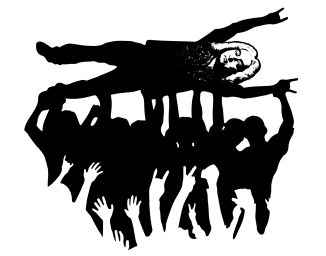
Handeled during the Messiah

classicalPunk

image by artist Becca Rose – http://www.beccarose.co.uk

A recent story about my attempts to crowd-surf during a performance of Handel’s Messiah in Bristol (originally published in the Independent) became a national headline in the UK over the weekend. The story in question happened in the summer of 2013, but nearly a year later, it is now going viral across the internet. Seems there’s not much to talk about in classical music over the last 11 months.
Continue reading

Hidden Fields Trailer!

Adam Laity has put together an awesome little trailer for the most recent version of Hidden Fields, made using the danceroom Spectroscopy framework. Hidden Fields interprets dancers as fields whose movement creates ripples and waves in an invisible sea of energy. The result is a gentle piece comprised of interactive graphics and soundscapes, both of which respond in real-time to how the dancers use their movement to sculpt the invisible fields in which they are embedded. Enjoy!