proteins in VR part II: tying knots & binding ligands

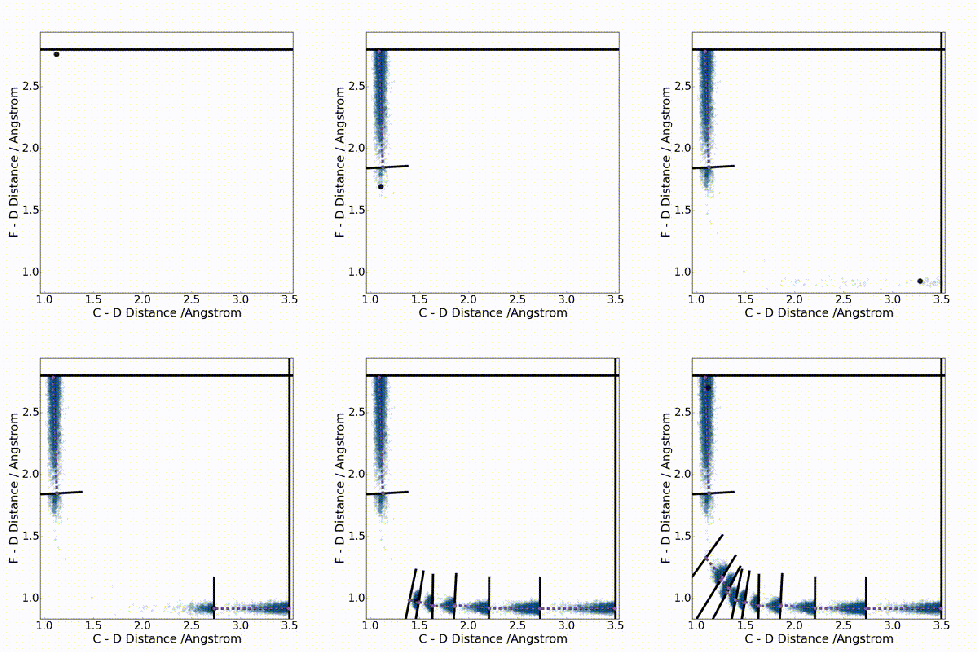
A little bit more progress in our molecular VR research work… Building on the framework which we demoed in Salt Lake City at Supercomputing 2016, we’ve started looking at applications to biomolecular systems with interesting conformational dynamics which are difficult to observe using standard molecular simulation workflows. The two videos that I’ve posted here were made by PhD students Mike O’Connor and Helen Deeks. The videos show Mike & Helen’s view within the real-time Nano Simbox virtual reality environment as they utilize a wireless set of “atomic tweezers” to steer a real-time molecular dynamics simulation (i.e., a real-time GPU accelerated implementation of the AMBER force field).
Continue reading

Multi-person molecular virtual reality

We’ve been busy at work over the past few months developing various aspects of our virtual reality environment for real-time interactive molecular dynamics. The thing that I’m totally psyched about right now is the fact that we’ve extended the framework that so we can put multiple people in the same virtual reality!!! Multiple people, stood around the same molecule can all play with it as if it were a tangible object. The very rough cut video I’ve linked to here (a combined effort by myself, Becca Rose, Alice Philips, and Phil Tew) is a quick attempt to try & illustrate what it’s like to inhabit VR with other people, and also to give you some sort of ideas of what you might do with this setup… playing catch with a bucky ball for example!
Continue reading

Philip Leverhulme Prize

440

I recently found out that I won a Philip Leverhulme Prize! These prizes have been awarded annually since 2001, with the aim to “recognise the achievement of outstanding researchers whose work has already attracted international recognition and whose future career is exceptionally promising.” They’re named after Philip Leverhulme, who died in 2000, and was the grandson of Lord William Leverhulme.
Continue reading

tying molecular knots in virtual reality

Over the past few months, I’ve been playing with a new integrated hardware-software framework that fuses the latest in interactive high-performance computing, the latest in virtual reality, and the latest in research-grade GPU-accelerated molecular physics. It’s really fun, and I’m basically addicted. Since we got it working, I’ve had a steady stream of colleagues knocking on my office door asking me if they can try it out. It’s slightly annoying, because I had intended to be ultra-productive during the summer lull in the academic calendar, but that has hasn’t really worked out… When my colleagues aren’t playing with it, then I’ve struggled to get much work done because I’ve mostly spent time hanging out in VR playing with my favourite molecular simulations…
Continue reading

Making Sacred Space in the Smokies

For a week during August, I spent time in Tennessee’s Smoky Mountains, building a stone shrine to house a statue of the Divine Mother. The shrine was constructed at the top of a small mountain, on land looked after by the Milarepa Osel Cho Dzong retreat center, using a statue donated by Joe Wall, and labor/resources contributed by a team that came from all over the world.
Continue reading

Micro-Choreography

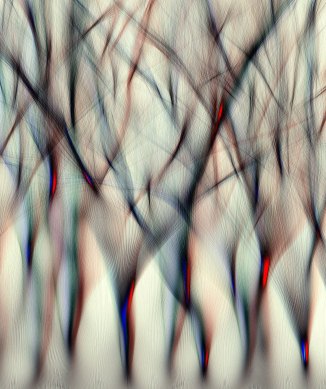
TUST_forrest

“Tust Forest” courtesy of Prof Eric Heller

Richard Feynmann famously said “If we were to name the most powerful assumption of all, which leads one on and on in an attempt to understand life, it is that all things are made of atoms, and that everything that living things do can be understood in terms of the jigglings and wigglings of atoms.
Continue reading

Leonardo Cover Article

LEO_49_2_cover-v4

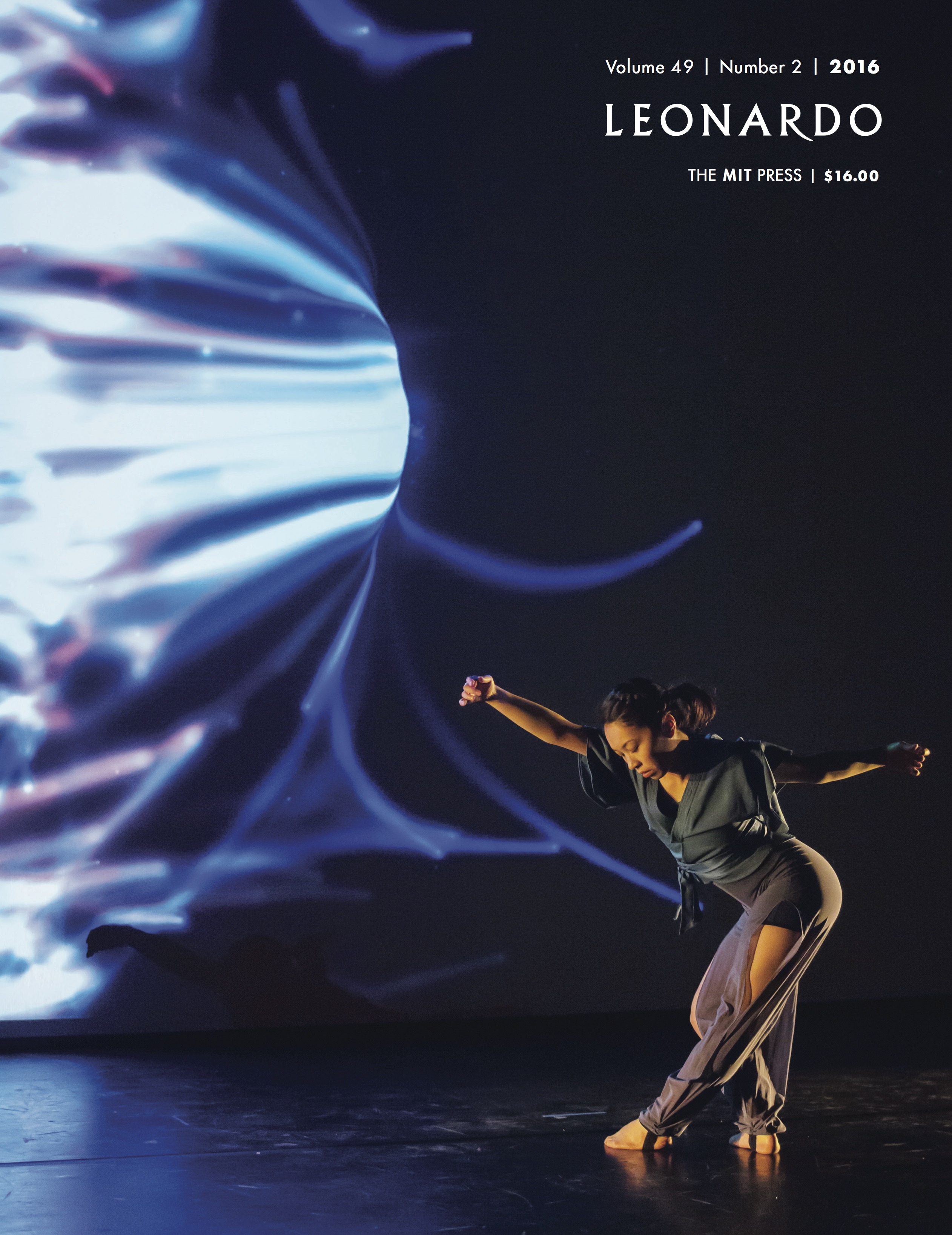
Just a quick post here to highlight some exciting news: we’ve got a paper on the cover of the current issue of Leonardo – and it looks lovely! Leonardo, published by MIT press, is the leading international peer-reviewed journal on the use of contemporary science and technology in the arts and music, and also for discussing applications and influences of the arts and humanities on science and technology.
Continue reading